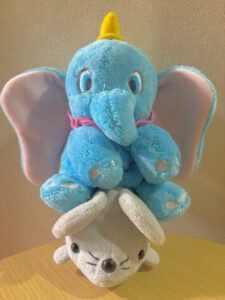
Dumbo in the movie was portrayed as anthropomorphic, like a human being. In fact, elephants and people share many similar characteristics and behavior. If eyes could talk elephants have so much to say, that is if we look and listen.
This blog has five parts:
- Three Species of Elephants
- Affinity with Human
- Elephant Stories
- Elephart
- Pachyderm Pals
The Three Species of Elephants
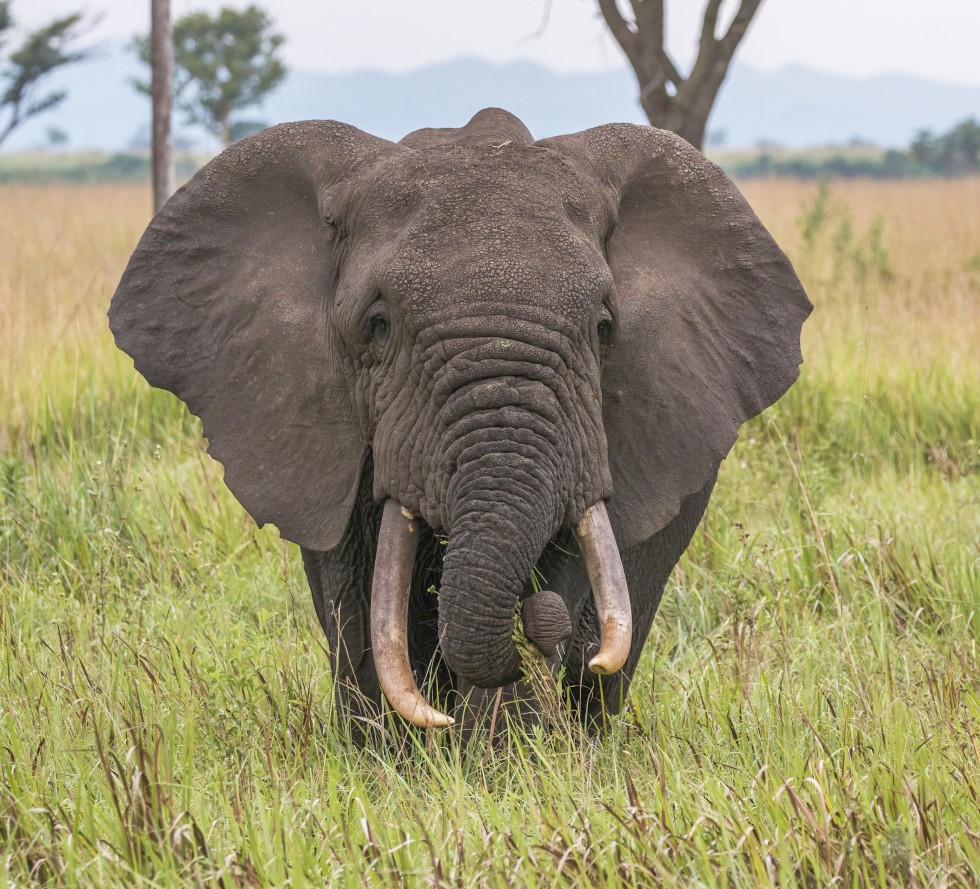
African Bush elephant’s face – Charles J. Sharp, CC BY-SA 4.0 https://creativecommons.org/licenses/by-sa/4.0, via Wikimedia Commons
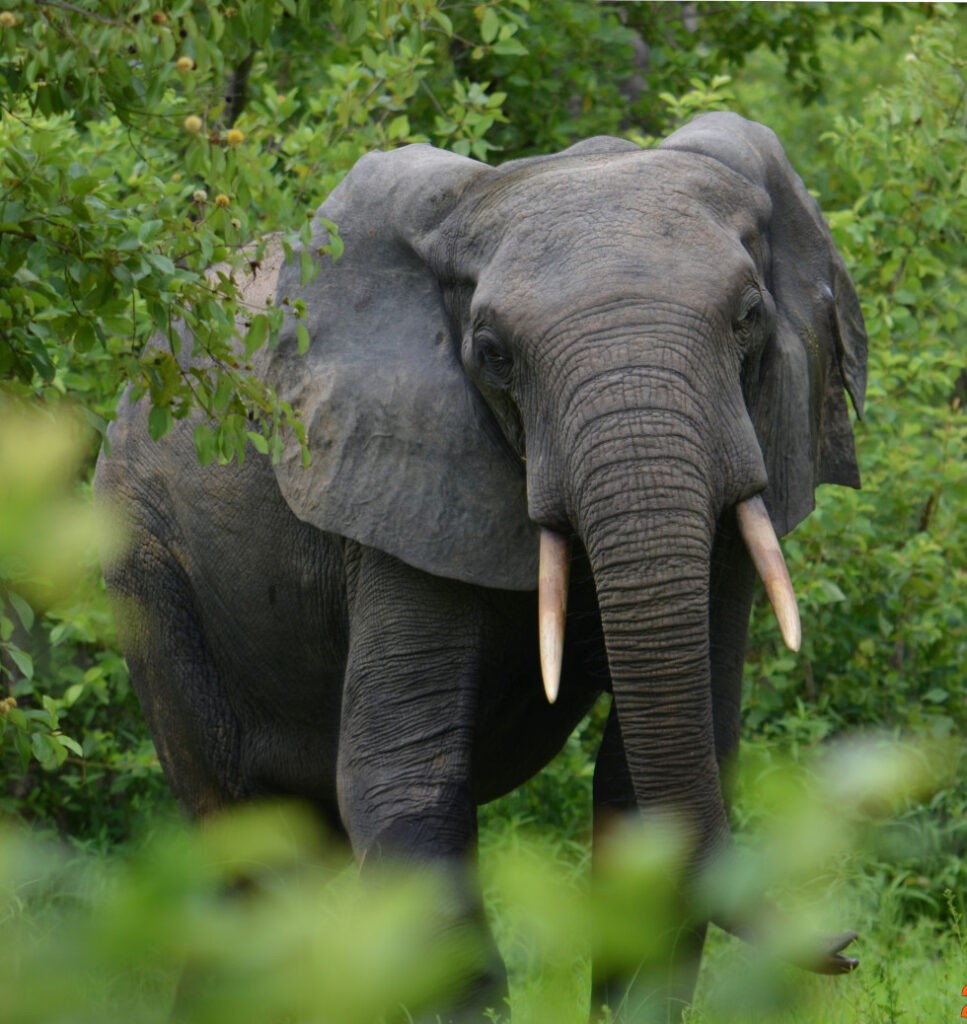
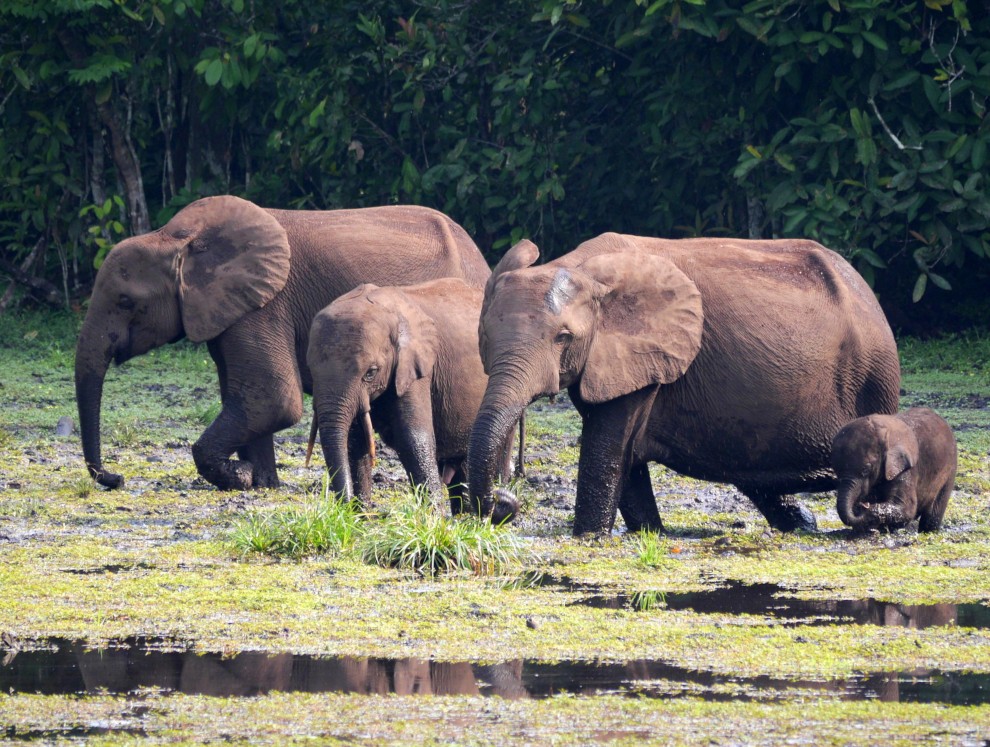
African Forest elephant’s face – Sheihu Salawatia, CC BY-SA 4.0 <https://creativecommons.org/licenses/by-sa/4.0>, via Wikimedia Commons
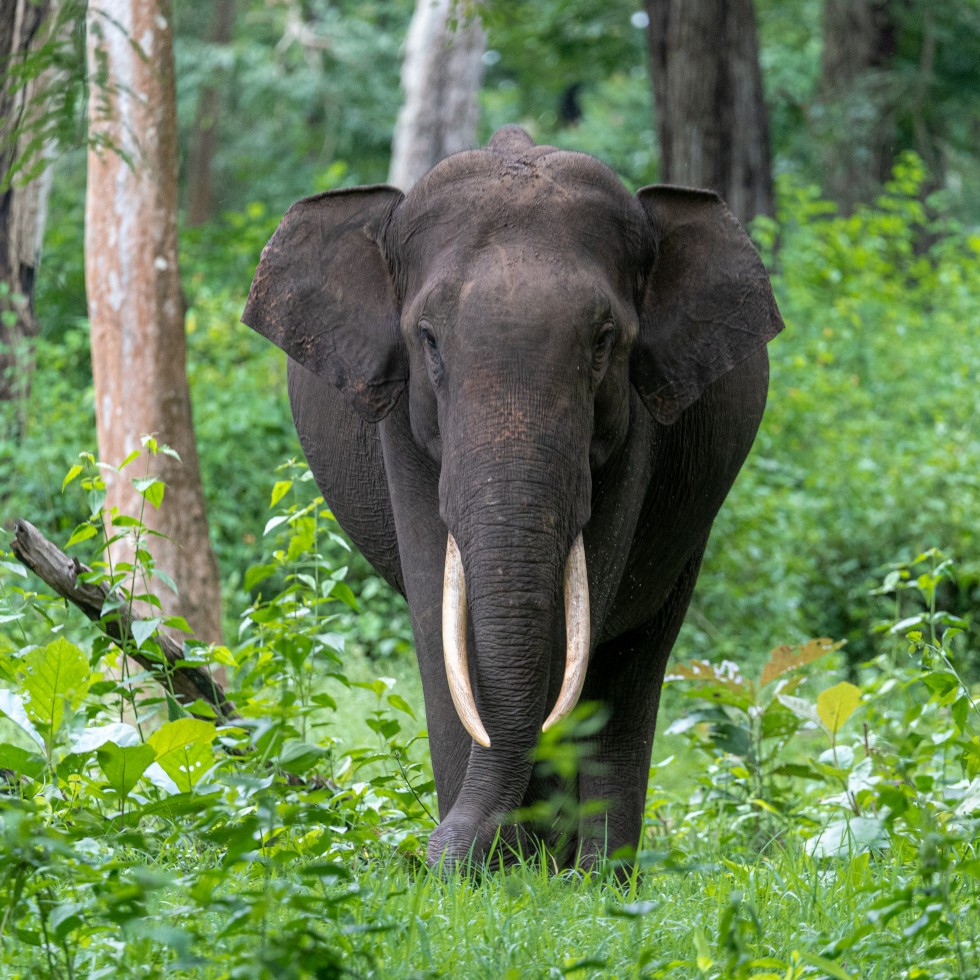
Asiatic elephant’s face – Jean-Paul Boerekamps, CC0, via Wikimedia Commons
The African Bush or Savanna Elephant
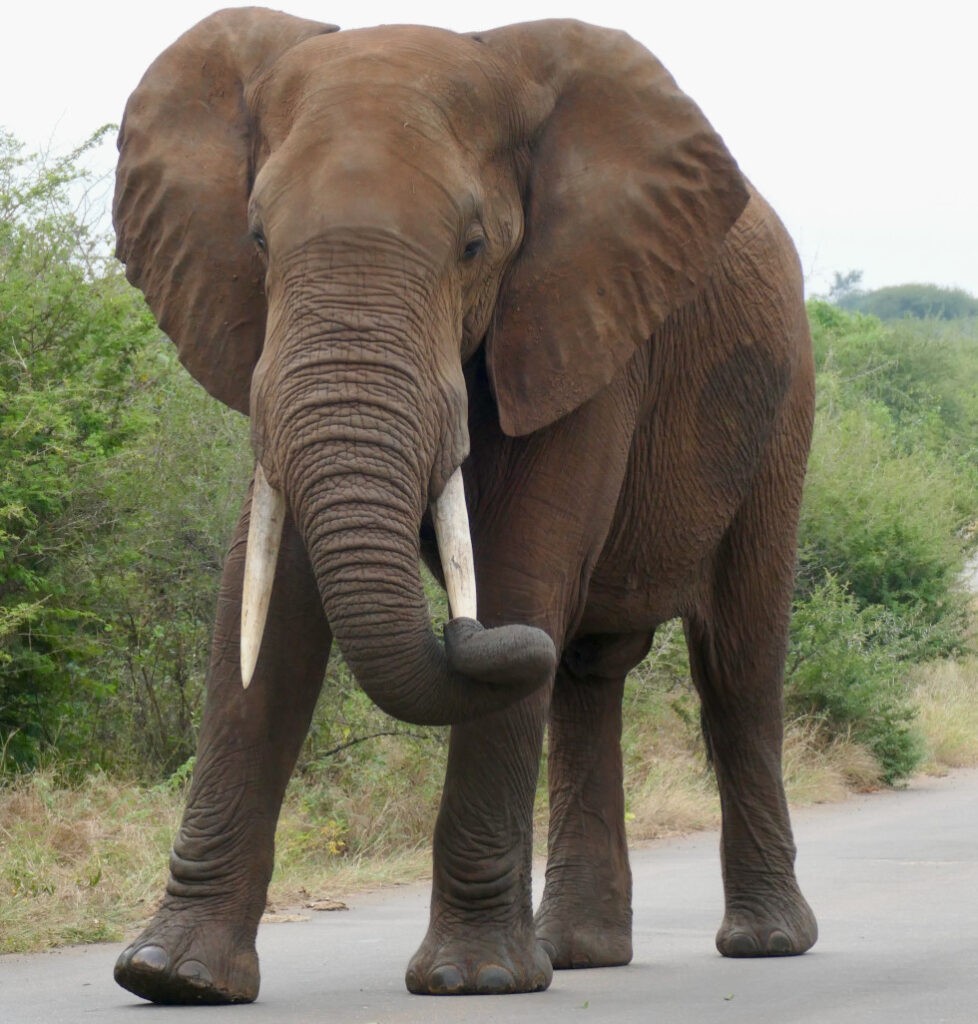
Elephants are the largest terrestrial animal and the African bush is the tallest among the three species. They can stand as tall as a school bus and weigh heavier than a pick-up truck.
Female elephants, called “cows” have straighter tusks compared to the larger and curved shape of the “bulls”, their male counterparts.

Shaped like the continent of Africa, Savanna’s large ears flap like a hand fan to bring cool air.
African Bush Elephant – Bernard DUPONT from France, CC BY-SA 2.0 https://creativecommons.org/licenses/by-sa/2.0, via Wikimedia Commons
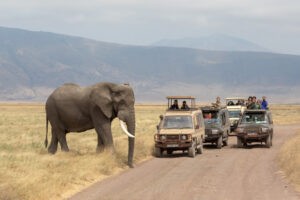
Elephant crossing – Zenith4237, CC BY-SA 4.0 https://creativecommons.org/licenses/by-sa/4.0, via Wikimedia Commons
Continent of Africa – Martin23230, CC BY-SA 3.0 https://creativecommons.org/licenses/by-sa/3.0, via Wikimedia Commons
The African Forest Elephant
Shortest among all the three species of elephants, African Forests are lighter in weight and darker in skin shade than their Savanna cousins. Their trunks are thinner and harder too.
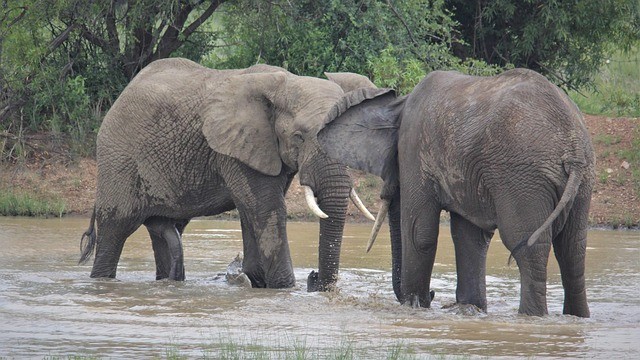
An eight-footer basketball player can easily do a “hongi”with a medium sized Forest Elephant, that is a nose to nose, forehead to forehead greeting. Elephants among themselves love hongi too!
Hongi is a Maori greeting with a deep spiritual meaning, “we share a spirit”.

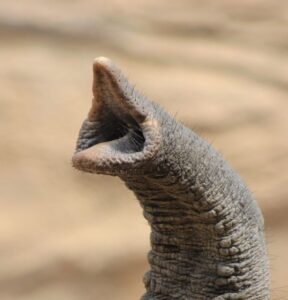
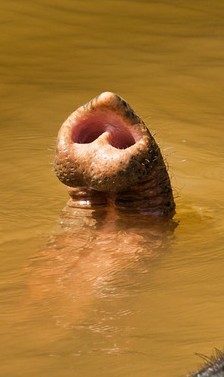
Both the Bush and Forest elephants have the same two finger like tip trunks, top and bottom. Asian elephants have one on top. It is a multifunctional organ and gadget. It is their nose to breathe and smell, fingers to lift food, a hand to signal, their arm to carry and wrestle. Use it as a hose to drink, spray water and sand, a snorkel when they swim, and as a scanner to feel things.
Forest Elephants by Matt Muir, CC BY 4.0 via Wikimedia Commons
elephant trunk DominikRh from Pixabay
Greg George, CC BY-SA 2.0 https://creativecommons.org/licenses/by-sa/2.0, via Wikimedia Commons (asian elephant trunk)
Image by H. Hach from Pixabay asian snout pixabay
forest elephants’ “hongi” Image by Nel Botha from Pixabay
Ministériu Negósius Estranjeirus no Kooperasaun, Public domain, via Wikimedia Commons – politicians doing “hongi”
Asian Elephant (Elephas Maximus)
There are three subspecies of Asian Elephants, the Bornean is a distinct Asian subspecies due to to their differing genetics
Indian Elephants (Elephas Maximus Maximus)
Found mostly in India, in smaller numbers they are present too in Bangladesh, Bhutan,Cambodia, Laos, Malaysia, Myanmar, Nepal, Thailand and Vietnam.
Average Size Comparison
| height | weight | length | |
| Savanna | from 3 meter/10-13 feet | 6000 kg 13,450 lbs | 3-4 m/ 10-13 ft |
| Forest | from 2.5 m 7-10 ft | 5000 kg/12,000 lbs | 2-3 m 7-9 ft |
| Asian | from 2.5 m 6.6-11 ft | 5,500 kg/13,000 lbs | 2-3.5 m /7-11 f |
All Asian elephants and the African Forest have five toes on their front feet, and four at the back feet. The African Bush has four toes on the front and 3 on the back feet.
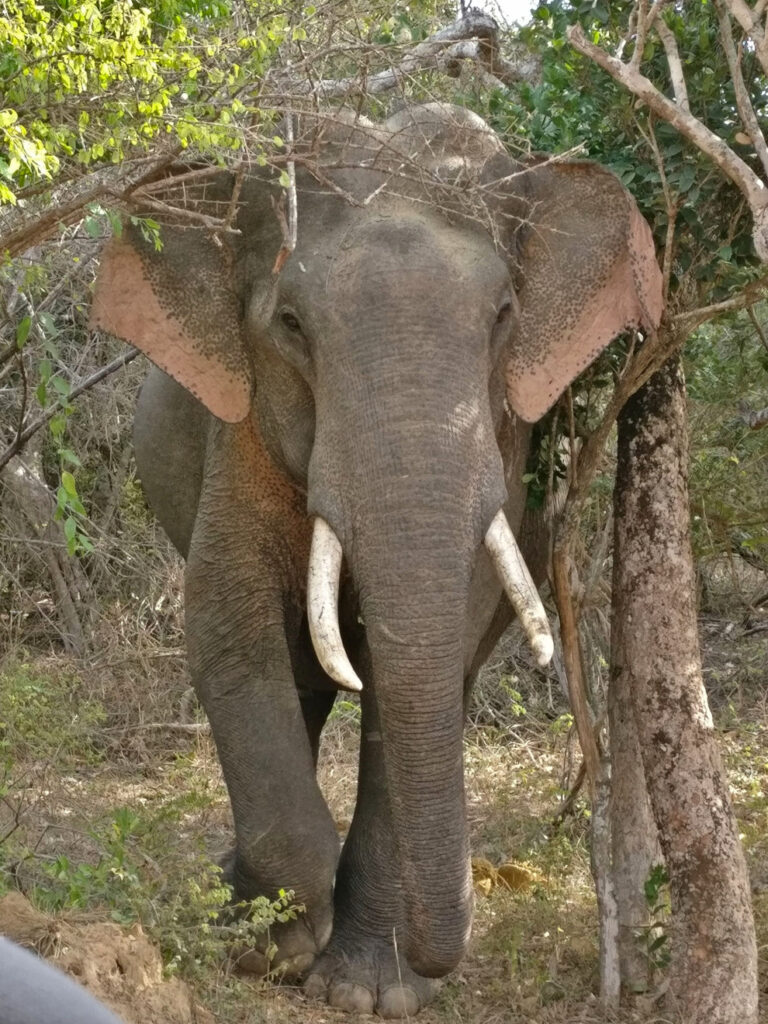
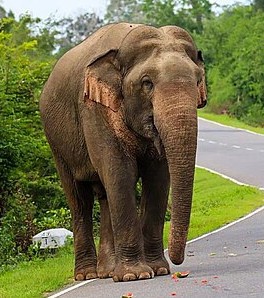
Sri Lankan Elephants Elephas Maximus Maximus
Native to Ceylon now Sri Lanka, Sri Lankan elephants are the largest among the three subspecies of Asiatic elephants and have the most occurrence of pinkish depigmentations on the ears, trunk and face as they get older.
Do you notice the two dome structure head of our model Asian elephant on the picture. Compare it with an African elephant below.
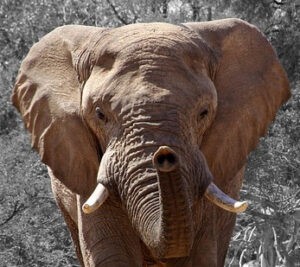
Most female Asian elephants do not grow tusks or grow very small tusks called “tushes”. When male elephants are tuskless, they are called, “makhas”. When bulls have a pair of great big tusks (about 45 kg or 100 lbs each), they are called, “tuskers”.
Sumatran Elephants (Elephas Maximus Sumatranus)
Sumatran elephants are found exclusively in the Indonesian island of Sumatra. Together with the African Forest elephants, pictured below, they are the most critically endangered species of elephant (in 2025, around 2,500 Sumatran elephants and less than 100,000 African Forest elephants exist worldwide). Smallest among Asian elephants, Sumatrans have an extra pair of ribs numbering twenty while the rest have nineteen, African elephants have twenty-one pairs.
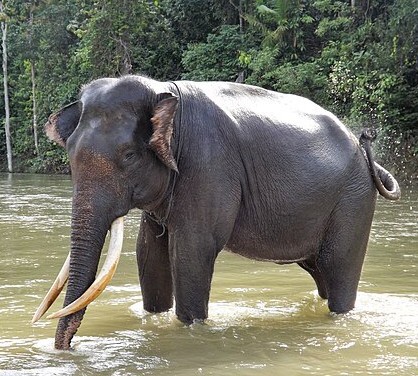
If African elephants have their big ears to dissipate heat, Asian elephants have sparse hair all over their bodies for the same reason. The wiry hair catches heat blocking direct heat to the skin.
The middle back part of an Asian elephant is convex shape making it look a bit elevated while that of an African elephant has a concave hollow like part. Have you compared the two photos?
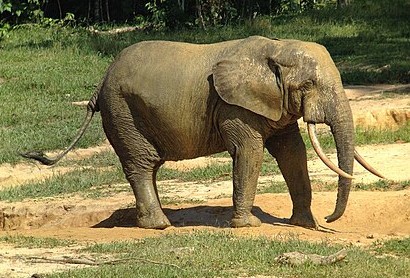
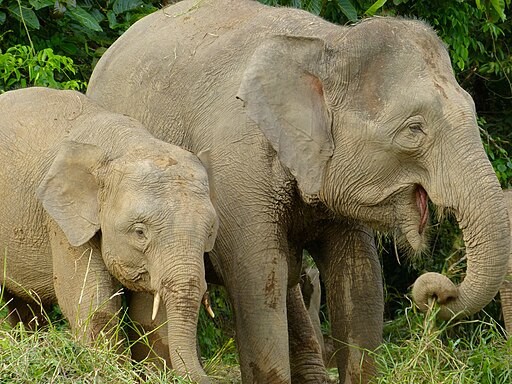
Bornean/ Pygmy Elephants (Elephas Maximus Borneensis))
Found in the third largest island in the world, Borneo. Bornean elephants have an alternative name, Pygmy elephants, not because they are short in stature but they are the smallest among the gentle giants species. They also have wider faces, bigger ears, rounder stomachs and the longest tail. Sadly there are only less than one thousand of them left in Borneo and without actions to protect them, like all the other elephants, they are heading to extinction.
Let us read more about elephants in Animal Journal and find out ways to save them.
Kandukuru Nagarjun from Bangalore, India, CC BY 2.0 https://creativecommons.org/licenses/by/2.0, via Wikimedia Commons (Right) Chands99, CC BY-SA 4.0 https://creativecommons.org/licenses/by-sa/4.0, via Wikimedia Commons
Sri Lankan elephant – Beatlegeus, CC BY-SA 4.0 https://creativecommons.org/licenses/by-sa/4.0, via Wikimedia Commons
Sumatran Elephant by Léodras, CC BY-SA 4.0 https://creativecommons.org/licenses/by-sa/4.0, via Wikimedia Commons
Pygmy Elephant by Bernard DUPONT from FRANCE, CC BY-SA 2.0 https://creativecommons.org/licenses/by-sa/2.0, via Wikimedia Commons
African Elephant head shape image by Pgeyr from Pixabay